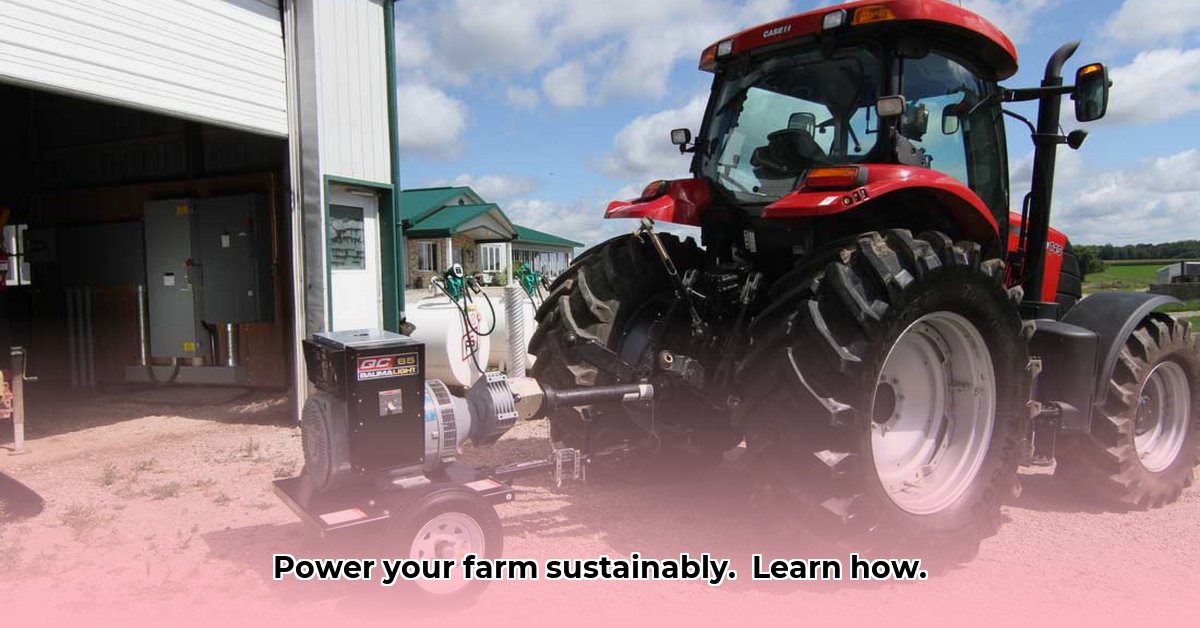
Sustainable agriculture demands innovative solutions, and reliable power is paramount. Fluctuating electricity costs and environmental concerns challenge farmers. Power Take-Off (PTO) tractor-driven generators offer a compelling response, providing efficient, independent power for diverse farm operations. To understand how PTO works, check out this helpful resource: PTO mechanics. This guide explores PTO generator selection, installation, maintenance, and financial considerations to help you determine if this technology aligns with your sustainable farming goals.
Understanding PTO Tractor-Driven Generators
PTO generators cleverly harness your tractor's power to produce electricity. A spinning shaft (the PTO) connects to the generator, converting mechanical energy into electrical power. This provides grid independence, crucial during outages or in remote areas. Efficiency is a key benefit, alongside consistent power supply. You can power irrigation pumps, grain dryers, and other essential equipment, reducing your reliance on the grid and potentially your carbon footprint.
However, PTO generators require a substantial upfront investment. Ongoing fuel and maintenance costs must also be factored in. While not entirely "green," they represent a significant step toward more sustainable power solutions.
Choosing the Right PTO Generator
Selecting the appropriate PTO generator involves careful consideration of several factors:
Power Needs: Assess your farm's daily electricity consumption. Determine the required wattage (higher wattage means more power). A small farm might need a 10,000-watt unit; a larger operation could require 20,000 watts or more.
Tractor Capacity: Your tractor's PTO horsepower dictates the maximum power output it can provide. The generator's power requirements must not exceed this limit to prevent damage.
Budget: PTO generators vary widely in price. Research different models to find one that fits your budget and power requirements.
Additional Features: Consider features like voltage regulation and automatic start/stop capabilities to enhance convenience and efficiency.
Installation and Safe Operation
Proper installation is crucial for both efficiency and safety. Always strictly adhere to the manufacturer's instructions.
Step-by-Step Installation:
Secure Mounting: Mount the generator on a stable, level surface, ensuring proper alignment with the tractor's PTO shaft.
Shaft Connection: Connect the PTO shaft to the generator carefully, using all provided safety guards and components.
Electrical Connections: Connect the generator's output to your farm's electrical system. Engage a qualified electrician if needed. Ensure proper grounding.
Gradual Start-Up: Slowly engage the PTO shaft, gradually increasing the tractor's engine speed. Avoid abrupt movements.
Performance Monitoring: Constantly monitor the generator's operation, noting any unusual sounds, vibrations, or temperature increases.
Safety Precautions: Always disengage the PTO shaft before any maintenance or repairs. Wear appropriate safety gear.
Maintenance and Troubleshooting: Minimizing Total Cost of Ownership (TCO)
Regular maintenance is key to maximizing a PTO generator's lifespan and minimizing long-term costs – impacting your TCO.
Key Maintenance Tasks:
Oil Changes: Follow the manufacturer's recommended oil change schedule to maintain lubrication and prevent engine wear.
Air Filter Cleaning: Regularly inspect and clean or replace the air filter. A clogged filter impedes engine performance.
Belt Inspections: Check drive belts for wear and tear; promptly replace any damaged belts.
Wiring Inspection: Inspect wiring regularly for loose connections or signs of damage.
Troubleshooting common issues involves systematically checking these maintenance points. While precise TCO figures vary, diligent maintenance significantly reduces long-term expenses.
PTO Generators vs. Other Power Options
Choosing the right power source depends on several factors, each with advantages and disadvantages:
| Power Source | Pros | Cons |
|---|---|---|
| PTO Generator | Reliable, immediate power; off-grid capability | Higher initial cost; fuel dependent; maintenance |
| Solar Power | Environmentally friendly; low running costs | Weather dependent; high initial investment |
| Wind Power | Environmentally friendly; low running costs | Weather dependent; high initial investment; noise |
| Grid Electricity | Convenient; usually reliable | Environmental impact; fluctuating costs; outages |
Further research tailored to your specific location and farm needs is strongly recommended.
Financial Considerations: A Comprehensive Approach
Before investing, thoroughly analyze the financial implications. Explore financing options (loans, leases). Investigate potential government incentives or rebates for sustainable energy solutions. Assess the initial investment cost, fuel expenses, maintenance, repairs, and depreciation. Compare these to potential savings from reduced grid reliance. A comprehensive financial analysis is essential for long-term viability.
Key Takeaways:
- PTO generators provide grid independence, crucial for farm resilience.
- Strategic planning minimizes total cost of ownership (TCO).
- Comparing PTO generators against alternatives ensures an informed decision.
- Regular maintenance is critical for efficient operations and reduced long-term costs.
This guide provides a foundation. Further research tailored to your specific situation is advised to ensure your investment in a PTO generator contributes to a sustainable and prosperous farming operation.